
If you’ve been dealing with persistent shoulder pain and haven’t found lasting relief through rest or physical therapy alone, chances are you’ve started looking into your options. And if you’ve been researching long enough, you’ve probably come across the term PRP injections for shoulder.
Platelet-rich plasma (PRP) therapy is one of the biologic treatment options I discuss with certain patients as part of a broader conversation about their shoulder health. It isn’t a fit for every person or every condition, but for the right candidate, it may become a part of the treatment picture. In this post, I want to walk you through what PRP is, how we prepare and deliver it, which shoulder conditions may benefit, and what you can realistically expect. If you’d like to go deeper on the science first, you can also check out my post on how PRP works.
Key Takeaways
- PRP therapy uses concentrated platelets from your own blood with the goal of supporting tissue healing in the shoulder.
- The entire in-office process typically takes less than an hour, from blood draw to injection.
- PRP injections for shoulder conditions may be appropriate for rotator cuff tendinopathy, partial tears, bursitis, biceps tendinitis, mild arthritis, and certain labral injuries.
- Improvement may develop gradually over several weeks to months. Results vary by individual, and realistic expectations matter.
What Is PRP, Really?
Your blood contains several types of cells: red blood cells, white blood cells, and platelets, all suspended in a liquid called plasma. Platelets are probably best known for helping blood clot after an injury. They also carry proteins called growth factors. These are signaling molecules that play a role in tissue repair and the regulation of inflammation.
The core concept behind PRP therapy is this: by concentrating those platelets and injecting them directly into a damaged or inflamed shoulder structure, we may be able to amplify the body’s own natural healing response. Instead of relying on the relatively small number of platelets that naturally migrate to an injury site on their own, we’re delivering a targeted, concentrated biological signal right where it’s needed.
PRP falls under the broader umbrella of orthobiologics, a category of biologic treatments used in orthopedic care. Research in this space continues to grow. While results are promising for certain conditions, patient responses do vary. That’s one of the reasons a careful evaluation before treatment is so important.
How PRP Is Prepared: What Happens in the Office
Everything happens here in the office. The whole process typically takes less than an hour from start to finish.
Here’s a general overview of how PRP is prepared and delivered:
1. Blood Draw: We start by drawing a small amount of blood from your arm, similar to a routine blood draw.
2. Centrifugation: That blood sample goes into a centrifuge, a machine that spins at high speed to separate the blood’s components based on their density.
3. Platelet Concentration: We extract the platelet-rich layer, which contains a higher concentration of platelets than what circulates in your blood under normal conditions. That concentration is what makes PRP useful as a targeted biologic treatment.
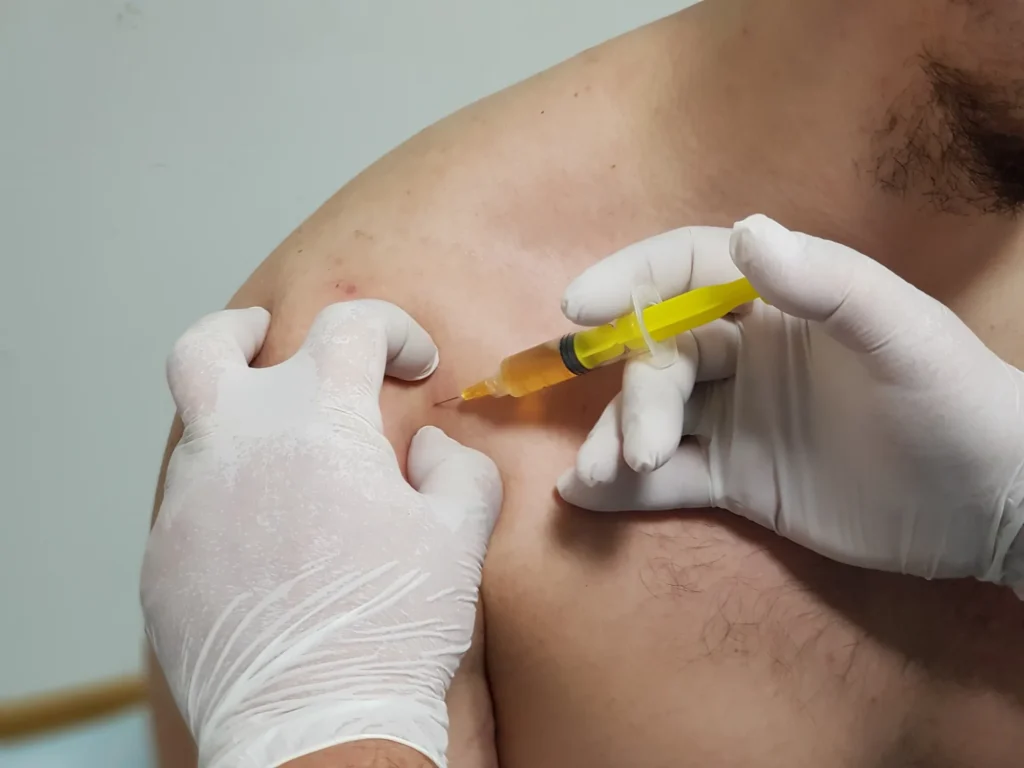
4. Injection: The concentrated PRP is injected into the targeted area of your shoulder. In some cases, I use ultrasound guidance during this step to help ensure accurate placement within the specific structure we’re treating.
Which Shoulder Conditions May Be Appropriate for PRP?
During a consultation, I carefully review each patient’s history, imaging findings, and prior treatment experience before discussing PRP as a potential option. Based on current evidence and my clinical experience, PRP may be worth considering in patients dealing with:
- Rotator cuff tendinopathy
- Partial-thickness rotator cuff tears
- Subacromial bursitis
- Mild to moderate glenohumeral arthritis
- Biceps tendinitis
- Partial labral injuries
For patients who are athletes or stay physically active, PRP can also fit naturally into a broader sports shoulder treatment plan. When rest and therapy haven’t resolved the issue, and surgery feels premature, PRP is sometimes a reasonable next step to explore.
That said, PRP is not the right tool for every situation. Full-thickness rotator cuff tears with significant structural damage, advanced arthritis, and certain instability patterns may require a different treatment approach. This is exactly why a thorough consultation matters. I’d rather give you an accurate picture of what PRP may or may not do for your specific shoulder than recommend a treatment that isn’t matched to your diagnosis.
What to Expect After Your PRP Injection
Knowing what happens after the injection can help you feel more prepared and set you up for a smoother experience overall. Some soreness at the injection site for the first few days is normal and expected. A mild inflammatory response is considered part of the intended biologic mechanism. Your body is reacting to the concentrated platelets, and that reaction may be part of how the healing process gets initiated.
Here are a few important things to keep in mind during that early recovery window:
- Avoid anti-inflammatory medications (like ibuprofen or naproxen) for a period after the injection. NSAIDs can interfere with the inflammatory response that PRP therapy is designed to leverage.
- Plan for some temporary activity modification. The days immediately following the injection are not the time to push through discomfort or return to heavy training.
- Physical therapy may be recommended alongside or following your PRP treatment. Strengthening the muscles around the shoulder and improving movement mechanics can be an important complement to the biologic work happening at the injection site.
- Keep us in the loop on how you’re feeling. Follow-up communication helps guide any decisions about next steps, including whether an additional injection might be worth discussing.
Setting Realistic Expectations
PRP is not a guaranteed fix. Response to PRP injections varies depending on the condition being treated, the severity of the injury, and individual biological factors that differ from person to person.
Symptom improvement tends to develop gradually, commonly over several weeks to a few months. Some patients notice meaningful changes relatively early on. For others, it may take longer. And in some cases, a second injection may be worth discussing, depending on how the shoulder responds and what the overall treatment picture looks like. That decision is always individualized and made collaboratively with you.
PRP may work best as part of a comprehensive plan. When it’s paired with appropriate rehabilitation, activity modification, and clear goal-setting, it can potentially be a meaningful component of the path toward better shoulder function.
If you’ve already tried conservative treatments without adequate relief, and you’re hoping to avoid surgery or at least delay it while continuing to improve, PRP therapy may deserve a place in that conversation. I encourage you to bring every question you have to your consultation.
Summary
PRP injections for shoulder pain represent one of the biologic options available to patients seeking something between conservative care and surgery. The treatment uses your own blood to deliver a concentration of growth factors to the affected area of your shoulder. Conditions that may be appropriate for PRP therapy include rotator cuff tendinopathy, subacromial bursitis, partial rotator cuff tears, biceps tendinitis, mild arthritis, and certain labral injuries. Improvement may develop gradually over several weeks to months, and individual results can vary.
Frequently Asked Questions
How long does a PRP injection appointment take?
The full process, from blood draw to injection, typically takes less than an hour. Most of that time involves preparing the PRP through centrifugation. The injection itself is relatively brief. You can generally expect to return to your normal activities the same day, though some temporary soreness is common.
Will I feel pain after the injection?
Some soreness at the injection site for the first few days is normal. This is a natural part of the biologic response. Acetaminophen may help manage mild discomfort, but anti-inflammatory medications like ibuprofen should be avoided for a period after treatment, as they can interfere with the intended mechanism.
How many PRP injections might I need?
For some patients, a single injection may be sufficient. Others may benefit from a series of injections spaced over several weeks, depending on their condition and how their shoulder responds. This is an individualized decision made during follow-up based on your progress and clinical picture.