

If you have been living with persistent shoulder pain, you may have already started asking yourself: What is total shoulder replacement surgery, and could it be right for me? Total shoulder replacement surgery is a common orthopedic procedure performed today, and understanding what it involves can help you have a more informed conversation with your surgeon. In this post, we’ll take a closer look at the basics of the procedure and recovery process.
Key Takeaways
- Total shoulder replacement surgery replaces damaged joint surfaces with artificial implants designed to restore more natural shoulder movement.
- Shoulder arthritis is among the most common reasons surgeons recommend this procedure.
- Recovery typically takes several months and involves a structured physical therapy program.
Understanding Your Shoulder
Before diving into what total shoulder replacement surgery actually involves, it helps to understand how your shoulder works in the first place. The shoulder is remarkably complex. It is one of the most mobile joints in your body, capable of moving in nearly every direction. That versatility comes with a trade-off, though, as it also makes the shoulder more vulnerable to injury and wear over time.
Three bones come together to form your shoulder joint: the humerus, which is the long bone of your upper arm; the scapula, or shoulder blade; and the clavicle, commonly known as the collarbone. The main joint where movement happens is called the glenohumeral joint. In this joint, the rounded top of the humerus, referred to as the humeral head, fits into a shallow socket on the scapula called the glenoid.
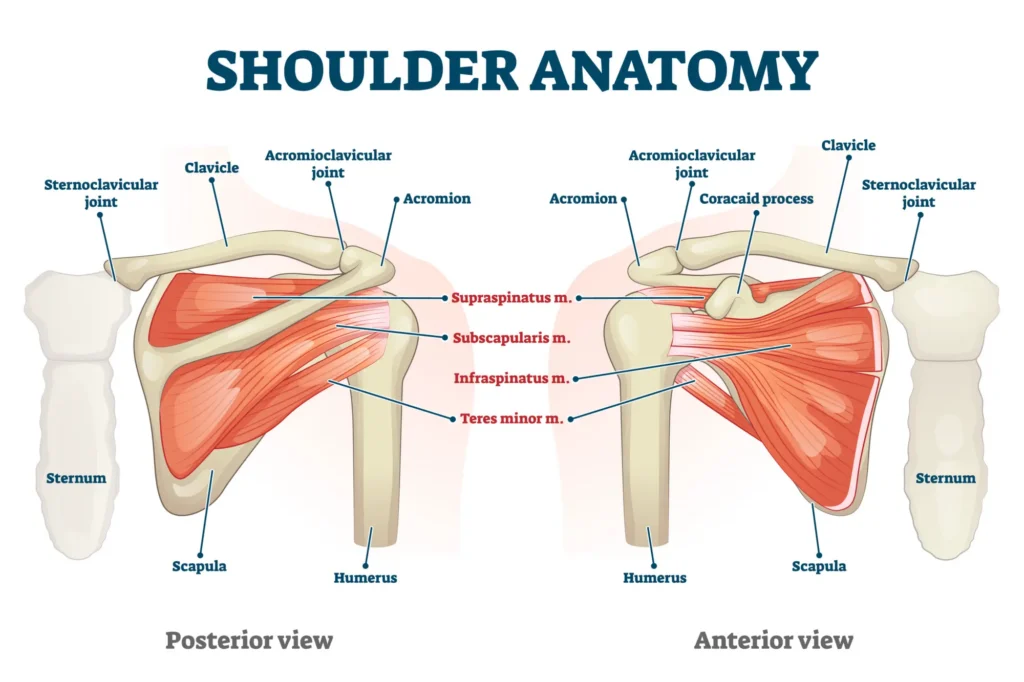
A smooth tissue called articular cartilage lines both the ball and the socket. This cartilage helps reduce friction and allows the joint surfaces to glide smoothly. Surrounding the joint, a group of muscles and tendons known as the rotator cuff works to keep the humeral head stable within the socket while also powering much of your shoulder’s movement.
What Conditions Often Lead to Shoulder Replacement Surgery?
The most common reason a surgeon may recommend total shoulder replacement surgery is shoulder arthritis. Over many years of use, the cartilage lining your shoulder joint can gradually wear thin. Eventually, it can wear away almost entirely, which can lead to painful bone-on-bone contact.
Several types of arthritis can affect the shoulder:
- Osteoarthritis results from the natural wear and tear on the joint over many years.
- Rheumatoid arthritis is an autoimmune condition in which the body’s immune system attacks the joint’s cartilage.
- Post-traumatic arthritis can develop after a significant shoulder injury, such as a rotator cuff tear, a torn ligament, or a fracture, that has altered the joint surfaces over time.
In all of these cases, the underlying issue tends to be the same: the smooth surfaces that once allowed painless movement have been compromised. When non-surgical treatments stop providing enough relief, surgery could become a conversation you have with your doctor.
How Is Shoulder Arthritis Treated Before Surgery?
Surgeons and orthopedic specialists generally recommend conservative, non-surgical treatments first. These may include physical therapy designed to strengthen the muscles around the shoulder, activity modifications to reduce strain, and over-the-counter or prescription anti-inflammatory medications. In some cases, corticosteroid or platelet-rich plasma injections may be discussed.
If, despite those approaches, pain is interfering with sleep, making everyday tasks difficult, or limiting your ability to stay active, then a conversation about total shoulder replacement surgery may be appropriate. Your surgeon will likely want to review imaging, including X-rays or an MRI, to get a clearer picture of how much damage has occurred.
What Actually Happens During Total Shoulder Replacement Surgery?
In a total shoulder replacement, an experienced shoulder surgeon removes the damaged surfaces of both the humeral head and the glenoid. Those surfaces are then replaced with carefully fitted artificial implants. The goal is to recreate a smooth, functional joint.
Surgery is performed under general anesthesia. Most patients also receive a nerve block, which can help manage pain in the hours immediately following the procedure. The operation itself generally takes somewhere in the range of one to two hours, though that can vary depending on the complexity of each individual case.
What Can You Expect During Recovery?
Recovery from total shoulder replacement surgery tends to be a gradual process. Most patients go home the same day or spend one night in the hospital. For the first few days, some pain and swelling around the surgical site is fairly normal. Your doctor will recommend pain management options.
A sling is commonly used in the early weeks to support the shoulder and limit movement while the joint begins to heal. Your surgeon or care team will give you a detailed rehabilitation plan, and physical therapy tends to begin relatively soon after surgery.
Many patients are able to begin returning to light daily activities around two to six weeks after surgery. Returning to more demanding activities, like sports or physically strenuous work, may take several months. Full recovery often takes six months to a year or longer. Every recovery looks different, depending on the procedure and individual health factors.
How Has Implant Technology Evolved?
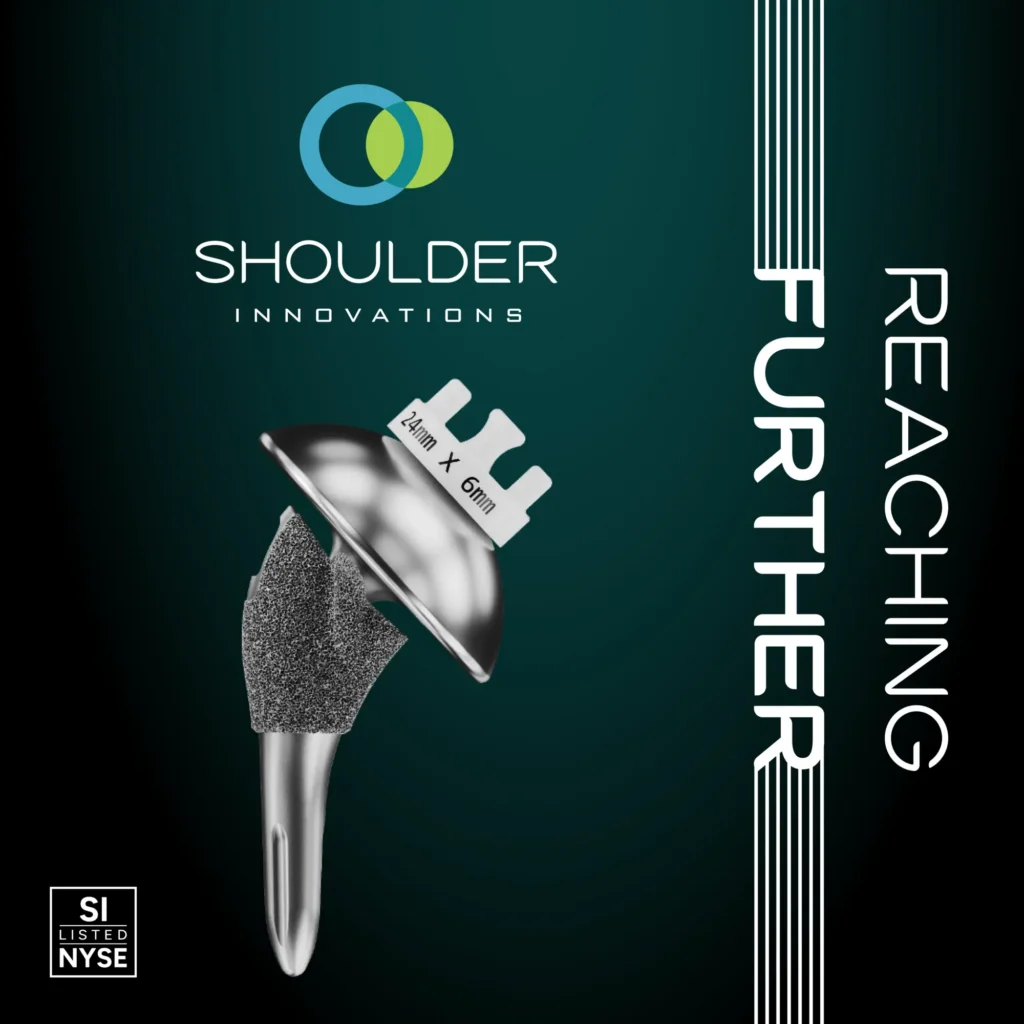
One of the more encouraging developments in recent years has been the advancement of implant design and surgical planning technology. Newer implant systems tend to focus on more accurately restoring your natural shoulder anatomy and preserving as much healthy bone as possible during surgery. Some of the newer implant systems on the market, such as the InSet® Shoulder System, incorporate design features specifically intended to address common long-term challenges. Advances in computerized surgical planning software have also allowed some surgeons to map out implant placement in three-dimensional detail before the patient ever enters the operating room. These kinds of tools may help improve surgical precision and could contribute to improved implant positioning and longevity.
Who Tends to Be a Good Candidate?
Total shoulder replacement surgery is not right for everyone. It tends to be a good option for patients who have significant joint damage, usually from arthritis, and who have already tried conservative treatments without lasting relief. The condition of the rotator cuff matters, too. The specific pattern of wear in the joint also plays a role in determining whether an anatomic total shoulder replacement is the best path forward, or whether a different type of procedure such as a reverse shoulder replacement might be more appropriate.
If you are wondering whether total shoulder replacement surgery could be a fit for your situation, the best starting point is a thorough evaluation with an experienced shoulder specialist. They can review your imaging and assess your symptoms. From there, they can help you weigh your options with a clear understanding of your specific anatomy and goals.
Summary
Total shoulder replacement surgery may offer a meaningful path toward pain relief and restored function for many patients dealing with significant shoulder arthritis or joint damage. The procedure has become increasingly refined over the years, with newer implant designs and surgical planning tools aiming to improve both short-term recovery and long-term durability. If shoulder pain is affecting your quality of life, a consultation with a specialist can help determine whether surgery might be a suitable option.
Frequently Asked Questions
How long does total shoulder replacement surgery typically take?
The procedure often takes somewhere between one and two hours, though the exact duration may vary depending on the complexity of the case and the surgeon’s approach.
How long does recovery usually take?
Light daily activities may be possible within two to six weeks, but a return to more strenuous activities, including most sports, typically takes longer. Maximal recovery can take from 6 months to a year or longer. Your surgeon can provide a more specific estimate based on your condition and individual health factors.
Is total shoulder replacement surgery the same as reverse shoulder replacement?
No, an anatomic total shoulder replacement aims to restore your shoulder to its natural shape and mechanics. A reverse shoulder replacement changes the orientation of the joint and tends to be recommended in different clinical situations, often when the rotator cuff is compromised.