

If you’ve ever felt a sharp pinch, a dull ache, or a sudden pop in your shoulder during a lift, you’re not alone. Shoulder pain when lifting is one of the most common complaints I see in my practice, whether it comes from the gym, a physically demanding job, or everyday tasks like reaching overhead or carrying groceries. The shoulder is a remarkably complex joint, and it takes on a lot of load during lifting movements. Understanding what’s driving the pain is the first step toward addressing it.
Key Takeaways
- Common causes of shoulder pain when lifting include rotator cuff injuries, impingement, AC joint problems, labral tears, and biceps tendon issues.
- Several warning signs suggest it may be time to seek a professional evaluation, including pain that lingers beyond a few days, noticeable weakness, or a popping sensation during movement.
- Many cases respond well to non-surgical approaches like physical therapy, activity modification, and in some cases, injection-based treatments.
- Prevention plays a role. Proper technique, gradual loading, and consistent shoulder strengthening may go a long way toward keeping the joint healthy long-term.
Why the Shoulder Is So Vulnerable During Lifting
The shoulder is the most mobile joint in the entire body. That mobility allows you to press overhead, pull a heavy bag, or reach across a table. However, that freedom of movement comes with a structural trade-off.
Unlike the hip, the shoulder socket is remarkably shallow. The ball, the head of the upper arm bone, sits loosely in a cup and relies heavily on surrounding soft tissue to stay centered. The rotator cuff, a group of four muscles and their tendons, wraps around the joint and does much of that stabilizing work. The labrum deepens the socket. Ligaments reinforce the joint from multiple directions.
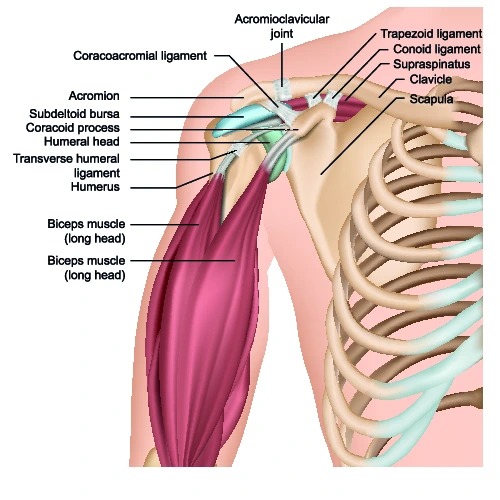
When you lift, especially when you lift heavy, lift repeatedly, or lift with mechanics that place the joint in a compromised position, all of that soft tissue gets put to work. Over time, or after a single misjudged movement, things can break down. That’s typically when shoulder pain when lifting starts to make its presence known.
Common Causes of Shoulder Pain When Lifting
Rotator Cuff Injuries
Rotator cuff injuries are among the most frequent causes of shoulder pain I see in patients who lift. These can range from mild tendinitis, where the tendon becomes irritated and inflamed, all the way to partial or full-thickness tears.
Repetitive overhead lifting places continuous stress on the rotator cuff tendons. Over time, that accumulated load may weaken the tissue and make it more susceptible to injury. A sudden, heavy lift or an awkward movement can also cause a more acute tear. Common symptoms include:
- A dull, aching pain deep in the shoulder or upper arm
- Pain that worsens with lifting or reaching overhead
- Weakness when trying to raise the arm
- Nighttime pain, particularly when lying on the affected side
Many patients with rotator cuff injuries can make meaningful progress through physical therapy and targeted strengthening. When structural damage is more significant and doesn’t respond to conservative care, surgical repair may be worth discussing.
Shoulder Impingement
Shoulder impingement happens when the tendons of the rotator cuff get pinched between the bones of the shoulder as the arm lifts. It’s especially common in people who do a lot of overhead pressing, pulling, or throwing.
The pain tends to feel dull and achy along the outer edge of the shoulder and upper arm. It typically worsens with overhead movements. Impingement is often connected to altered shoulder mechanics. Muscle imbalances, poor posture, or technique issues can all narrow the available space and contribute to the problem over time. Many cases respond well to physical therapy focused on restoring shoulder mechanics and strengthening the rotator cuff and scapular stabilizers.
AC Joint Problems
The acromioclavicular (AC) joint sits where the collarbone meets the top of the shoulder blade. It plays an important role during overhead and cross-body movements, and it can take a beating during certain lifting exercises.
AC joint pain when lifting tends to feel sharp and localized right at the top of the shoulder. Bench press, push-ups, and any exercise that brings the arm across the body may aggravate it. Direct shoulder impacts and falls can also injure this joint. Lower-grade AC joint injuries often respond to rest, ice, and physical therapy, while more significant injuries may require additional evaluation.
Labral Tears
The labrum is the ring of cartilage that lines the rim of the shoulder socket. It helps stabilize the joint and serves as the attachment point for the biceps tendon. Labral tears can result from a single traumatic event, like catching yourself during a fall, or from repetitive overhead stress that accumulates over time.
Lifting with a labral tear can produce a deep, sometimes difficult-to-pinpoint ache inside the joint. Some patients notice a catching sensation or a sense that the shoulder feels loose or unstable. Overhead movements and end-range loading tend to aggravate it. Diagnosis typically involves a physical exam and imaging. Treatment depends on the severity, type of tear, and the patient’s activity goals.
Biceps Tendon Problems
The long head of the biceps tendon passes through the shoulder joint and attaches to the top of the labrum. This positioning makes it vulnerable during heavy lifting, particularly pulling movements like rows or pull-ups, and during overhead pressing.
Biceps tendon irritation may cause a deep ache in the front of the shoulder that worsens with certain lifting movements. In some cases, a partial or complete tendon rupture can occur, sometimes accompanied by a distinct pop and bruising down the upper arm. Mild biceps tendon issues often improve with activity modification, physical therapy, and occasionally injection-based treatments. More severe injuries may warrant further evaluation to determine the best path forward.
Warning Signs You Shouldn’t Ignore
Not every ache after a hard workout requires an urgent trip to a specialist. Some mild soreness following unusually intense training may settle down with rest and recovery. But there are certain signs that suggest the shoulder deserves a closer look. Consider scheduling an evaluation if you notice:
- Pain that doesn’t improve after several days of rest
- Significant weakness in the arm, especially with lifting or rotation
- A popping, clicking, or grinding sensation inside the joint during movement
- Sudden, severe pain following a specific incident or movement
- Pain that disrupts sleep or makes it impossible to lie on the affected side
- Any visible deformity or rapid swelling after an injury
How to Prevent Shoulder Pain When Lifting
Some of the lifting-related shoulder pain I see in my practice connects to some combination of technique issues, muscle imbalances, or programming decisions that push the joint past its capacity without giving it adequate time to adapt.
Warm up before loading. The shoulder responds well to movement preparation before it takes on heavier work. Light band exercises, rotator cuff activation drills, and controlled range-of-motion movements may help prepare the joint before more demanding sets. Skipping the warm-up and going straight to heavy loads places unprepared structures under high stress.
Check your technique. Shoulder mechanics matter considerably. Flared elbows during pressing, excessive forward lean, or poor scapular positioning during overhead work can all increase joint stress. If your form has slipped as weight has increased, that’s worth addressing before continuing to load further.
Balance pushing and pulling. Many lifters accumulate far more pushing volume than pulling volume. Over time, that imbalance can lead to muscle tightness and altered shoulder mechanics that may contribute to impingement and rotator cuff stress. Aiming for roughly equal volume between the two movement patterns may help protect the joint.
Progress gradually. Sudden jumps in load or volume are a common way the shoulder ends up in trouble. Progressive overload is a sound principle, but the key word is progressive. Giving the tendons, ligaments, and surrounding muscles time to adapt to increasing demand may reduce the likelihood of overuse injuries developing.
Include rotator cuff and scapular work. Dedicated strengthening of the smaller muscles around the shoulder isn’t glamorous, but it may make a meaningful difference in long-term shoulder health. These muscles support proper joint mechanics and help protect against strain during heavier loading.
Listen to the signal. Some discomfort with new training demands is a normal part of adaptation. Pain that persists, sharpens with specific movements, or follows you into rest is a different kind of signal. Pushing through that kind of pain tends to turn a manageable problem into a more complicated one.
Non-Surgical Treatment Options
Many patients dealing with shoulder pain when lifting respond well to non-surgical care, especially when the problem is addressed early. Treatment typically starts with physical therapy focused on restoring shoulder mechanics, improving rotator cuff and scapular strength, and identifying movement pattern contributors.
For some patients, a corticosteroid injection may provide temporary relief and create a window for making progress in therapy. It’s not a cure on its own, but it can be a useful part of managing pain while the underlying issue gets addressed.
Platelet-rich plasma (PRP) therapy is another option some patients explore, particularly when more conventional approaches haven’t fully resolved the problem. PRP involves drawing a small amount of your own blood, concentrating the platelets, and injecting that plasma into the affected area.
For athletes and active individuals, the goal isn’t just pain relief; it’s returning to the activities that matter. That’s a priority I keep in mind when building any treatment plan. You can learn more about my approach to sports shoulder injuries on my website.
When Might Surgery Be Considered?
When structural damage is significant, when conservative treatment hasn’t provided adequate relief, or when the nature of the injury makes surgery the more appropriate choice, it may be worth a conversation.
Shoulder arthroscopy is a minimally invasive procedure that allows me to repair damaged tissue through small incisions using a small camera and specialized instruments. Recovery varies by procedure and by individual, but many patients work their way back to full activity with appropriate rehabilitation.
In cases where advanced shoulder arthritis is contributing to pain during lifting, shoulder replacement may also be discussed. Every patient’s situation is different, and I work with each person to understand their goals, their lifestyle, and what a realistic outcome looks like for them.
Summary
Shoulder pain when lifting is something I see regularly in my practice, and it covers a wide range of underlying issues, from rotator cuff irritation and impingement to labral tears and biceps tendon problems. The encouraging part is that many of these conditions respond well to thoughtful, conservative care. Physical therapy, technique corrections, gradual load progression, and in some cases injection-based treatments may all play a role in getting the shoulder back on track. In some cases, surgery may be considered.
Frequently Asked Questions
Is it normal to feel some shoulder discomfort when lifting?
Mild muscle soreness after a demanding workout is generally a normal part of training adaptation. What’s less normal is sharp pain during a specific movement, discomfort that lingers well beyond the workout, or any sensation of instability or catching inside the joint. If any of those symptoms are present, it may be worth having the shoulder evaluated.
Should I keep lifting if my shoulder hurts?
It depends on the type and severity of the pain. Mild discomfort that doesn’t worsen during activity and resolves quickly may not require you to stop lifting entirely, though some activity modification is often sensible. Sharp pain, pain that worsens during lifting, or pain accompanied by weakness or instability generally suggests stepping back from the aggravating movement and seeking evaluation.
Can poor lifting technique actually cause lasting damage?
Over time, it’s possible. Poor mechanics may place repetitive, abnormal stress on the rotator cuff tendons, bursa, and labrum. Those structures can tolerate a certain amount of load, but when the stress is consistently off-axis or imbalanced, cumulative damage may build before any single painful event ever occurs.