

Shoulder pain has a way of showing up uninvited. One morning you wake up and reaching for something overhead suddenly feels challenging. If that sounds familiar, shoulder inflammation may be behind what you’re experiencing. Whether your pain has been building for months or came on after a specific activity, understanding what’s happening inside your shoulder is an important first step. In this post, we’ll explore shoulder inflammation, including causes, symptoms, and treatment options.
Key Takeaways
- Shoulder inflammation can stem from several different causes, including rotator cuff problems, bursitis, arthritis, and labral tears.
- Symptoms may include pain with movement, stiffness, weakness, and disrupted sleep.
- Many cases can be managed with conservative care such as physical therapy, medication, or injections. When conservative options fall short, surgical options may be discussed.
What Is Shoulder Inflammation?
Your shoulder is a remarkably complex joint. It moves in more directions than any other joint in the body, which makes it useful for an enormous range of activities, from throwing a ball to reaching a high shelf to getting dressed in the morning. That same range of motion, though, is also what makes the shoulder vulnerable to problems over time.
Shoulder inflammation refers to a state where the tissues inside or around the shoulder joint become irritated, swollen, or reactive. Different structures can be involved. Tendons, bursa sacs, joint cartilage, and the lining of the joint can all become inflamed depending on the circumstances.
Inflammation itself is part of your body’s natural healing process, as it’s the immune system responding to perceived damage or threat. The problem is that it doesn’t always resolve on its own, especially if the underlying issue isn’t addressed. In those cases, what starts as short-term irritation can become a problem that affects your daily life.
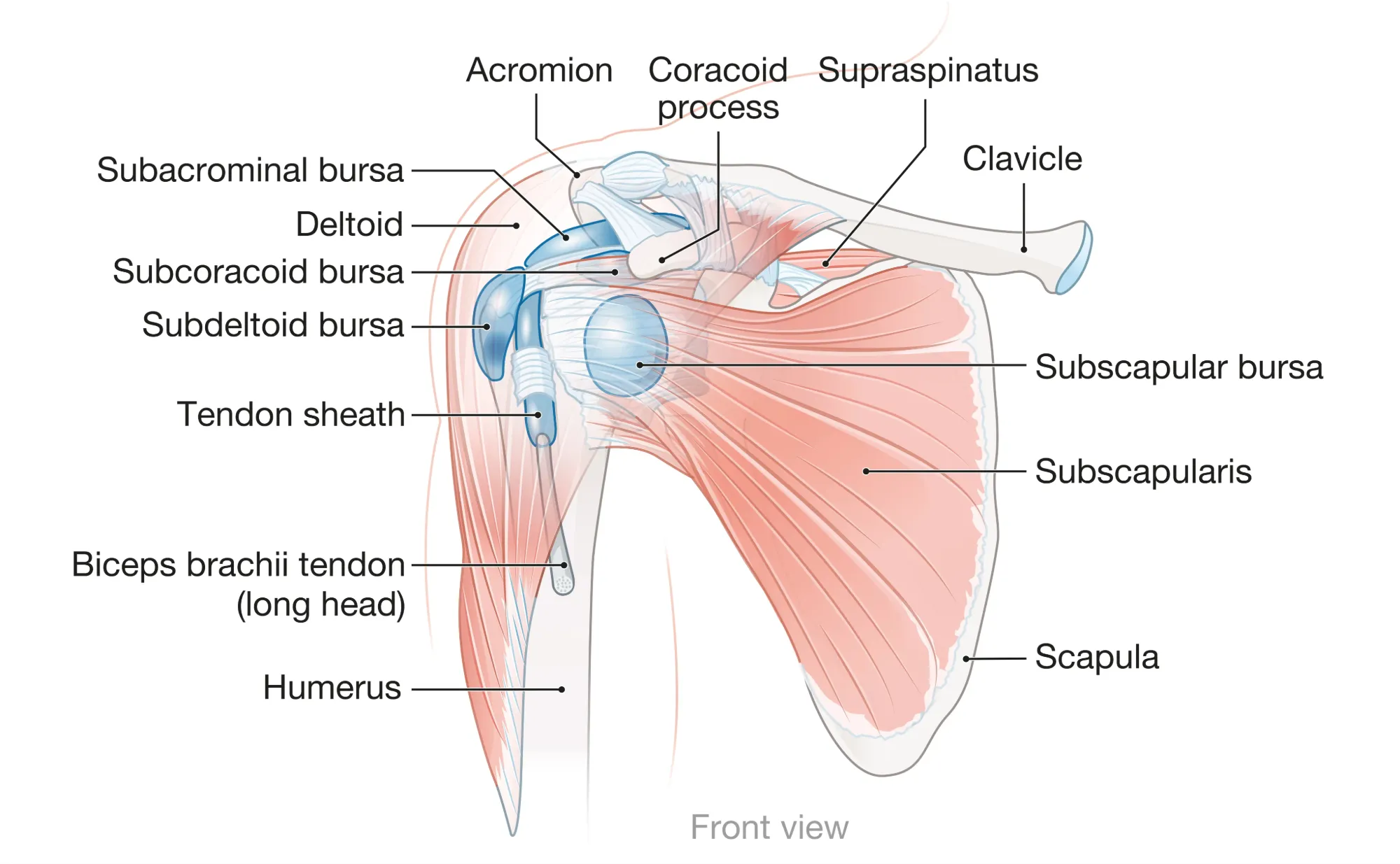
Common Causes of Shoulder Inflammation
There’s no single cause of shoulder inflammation. Several different conditions can trigger it, and sometimes more than one is going on at the same time. Here’s a look at the most common culprits.
Rotator Cuff Problems
The rotator cuff is a group of four muscles and their tendons that help stabilize and move the shoulder. Overuse, repetitive motions, or a direct injury can cause those tendons to become inflamed, a condition called tendinitis. Athletes, construction workers, and anyone who performs a lot of overhead activity may be particularly prone to this kind of inflammation.
Bursitis
Bursae are small fluid-filled sacs that act as cushions between tendons and bones throughout the body. The shoulder has a prominent bursa called the subacromial bursa, and when that sac becomes inflamed, often due to repetitive overhead motion or sustained pressure, bursitis develops. The resulting pain tends to be a deep, aching sensation that worsens with movement or when lying on the affected shoulder.
Arthritis
Osteoarthritis, the most common form, occurs when the cartilage in the shoulder joint gradually wears down over time. As the cushioning decreases, bone-on-bone contact can cause significant irritation and inflammation. Rheumatoid arthritis works differently. It’s an autoimmune condition where the immune system attacks the joint lining, triggering inflammation through an entirely different mechanism. Both types can cause significant pain and stiffness.
AC Joint Injuries
The acromioclavicular (AC) joint sits at the top of the shoulder where the collarbone meets the shoulder blade. Falls, direct impacts, and overuse can all cause AC joint injuries that lead to localized inflammation and pain right at the top of the shoulder.
Frozen Shoulder (Adhesive Capsulitis)
Sometimes the capsule surrounding the shoulder joint thickens and tightens, restricting movement. Frozen shoulder often develops gradually and tends to move through different phases, each with its own pattern of pain and limited motion. It can feel like your shoulder is progressively “locking up,” which can be both frustrating and alarming.
Labral Tears
The labrum is a ring of cartilage that deepens the shoulder socket and helps keep the ball of the joint in place. A tear, often from a fall, sports injury, or repetitive overhead activity, can cause joint instability along with accompanying inflammation. People with labral tears sometimes notice a catching or clicking sensation in the shoulder.
Recognizing the Symptoms
Shoulder inflammation doesn’t look the same from one person to the next. Symptoms can range from a mild, nagging ache to sharp pain that limits daily activities. Some of the most common signs include:
- Pain that worsens with certain movements, especially reaching overhead or behind your back
- A dull, persistent ache that lingers even at rest
- Stiffness that makes it difficult to rotate or fully lift your arm
- Swelling or tenderness around the shoulder joint
- Weakness when lifting, pushing, or reaching
- Disrupted sleep, particularly if lying on the affected shoulder is uncomfortable
It’s also important to know that shoulder pain can occasionally originate somewhere other than the shoulder itself. Conditions affecting the neck, and in some cases even the heart, can refer pain into the shoulder area. That’s one more reason why a proper evaluation matters.
How Shoulder Inflammation is Diagnosed
Getting the right diagnosis is essential, because the most effective treatment depends heavily on what’s actually causing your inflammation. Your doctor will likely start with your history. When did the pain start? What makes it better or worse? Have there been any specific injuries or changes in your level of activity? This background helps narrow down the most likely causes before any testing begins.
A physical examination follows. Your range of motion, strength, and specific areas of tenderness may be assessed. Following the exam, imaging tests may be ordered. X-rays are used to reveal changes in bone spacing, bone spurs, and signs of arthritis. If a soft tissue issue is suspected, such as a rotator cuff tear, labral problem, or significant bursitis, an MRI may be recommended as well.
Treatment Options for Shoulder Inflammation
How shoulder inflammation is treated depends significantly on what’s causing it, how severe it is, and how long it’s been going on. Many cases start with non-surgical approaches. An experienced shoulder specialist can evaluate your condition and help guide the most appropriate treatment path for you.
Rest and Activity Modification
Pulling back on activities that aggravate the shoulder gives inflamed tissues a chance to calm down. This doesn’t necessarily mean complete rest; rather, thoughtful adjustments to how you move and what you take on during recovery.
Physical Therapy
Depending on the condition, a structured physical therapy program can be highly effective. A therapist helps you strengthen the muscles supporting the shoulder, improve flexibility, and correct movement patterns that may be contributing to irritation.
Anti-Inflammatory Medications
Over-the-counter NSAIDs like ibuprofen may help manage pain and reduce inflammation in the short term. Your doctor can recommend a specific dosing schedule and duration.
Corticosteroid Injections
For more persistent or severe inflammation, a corticosteroid injection directly into the affected area may be considered to provide temporary relief. They tend to work best when used alongside other treatments like physical therapy, rather than as a standalone solution.
Platelet-Rich Plasma (PRP)
PRP therapy involves drawing a small amount of your own blood, processing it to concentrate growth factors and platelets, and injecting it into the affected tissue. The goal is to support the body’s own healing response. For certain conditions, it may be worth exploring.
Shoulder Arthroscopy
When conservative treatments haven’t provided enough relief and a specific structural problem has been identified, shoulder arthroscopy may be an option. This is a minimally invasive procedure using small incisions and a camera-guided approach.
Shoulder Replacement
In cases where arthritis has caused significant joint damage and other treatments haven’t delivered sufficient improvement, shoulder replacement surgery may be considered. I work carefully with each patient to determine whether this level of intervention makes sense for their specific situation.
Summary
Shoulder inflammation is a broad term that covers several overlapping conditions affecting the tendons, bursa, cartilage, joint lining, and surrounding muscles of the shoulder. It can range from a mild, manageable ache to something that significantly disrupts daily life. If shoulder pain has been holding you back, a shoulder consultation could be the first step toward understanding what’s going on.
Frequently Asked Questions
Can shoulder inflammation go away on its own?
In some cases, mild inflammation may improve with rest and time, particularly if it was triggered by a specific activity rather than an ongoing structural problem. However, inflammation that lingers for several weeks or keeps coming back is less likely to resolve without some form of treatment. Letting it go unaddressed can sometimes allow underlying issues to worsen.
Is surgery always required to treat shoulder inflammation?
No, many patients with shoulder inflammation find meaningful relief through conservative treatments like physical therapy, medication, injections, or PRP. Surgery tends to be reserved for situations where a clear structural problem exists and non-surgical options haven’t provided sufficient improvement.
How long does recovery from shoulder inflammation treatment typically take?
Recovery timelines vary widely depending on the cause and severity of your inflammation, the treatment approach used, and individual factors like overall health and activity level. Some patients notice improvement within a few weeks of treatment. Others may take several months to reach maximal recovery, especially if surgery was involved. I discuss realistic expectations with each patient before treatment begins so you know what to anticipate.