

Medically reviewed by Scott Vizzi, MD | Reviewed June 2026
Shoulder arthritis is one of the most common reasons patients come to see me at my practice here in the Tampa Bay area. I see it across a wide range of people, from active retirees in St. Petersburg who want to keep playing golf to working adults who can’t get through a full day without shoulder pain slowing them down. If you’ve been dealing with persistent shoulder pain and wondering whether shoulder arthritis could be behind it, this post is for you.
I want to walk you through what shoulder arthritis is, why it develops, what it feels like, and what your treatment options look like, from conservative approaches all the way to surgery.
Key Takeaways
- Shoulder arthritis develops when the cartilage inside the joint wears down, leading to pain, stiffness, and reduced range of motion.
- The most common forms are osteoarthritis, rheumatoid arthritis, and post-traumatic arthritis, each with slightly different patterns and timelines.
- Many patients manage symptoms successfully with physical therapy, injections, and activity modification before considering surgery.
- When conservative care is no longer enough, shoulder replacement surgery, whether anatomic or reverse, can offer meaningful and lasting relief.
What Is Shoulder Arthritis?
The shoulder is a ball-and-socket joint. The rounded top of the upper arm bone, called the humerus, fits into a shallow cup on the shoulder blade called the glenoid. In a healthy shoulder, smooth cartilage covers both surfaces, allowing the joint to glide with very little friction.
Shoulder arthritis is what happens when the cartilage breaks down. As it thins or disappears entirely, the underlying bone surfaces come into direct contact. That bone-on-bone friction causes pain, inflammation, and stiffness. Over time, the joint can develop bone spurs, irregular surfaces, and significant loss of motion.
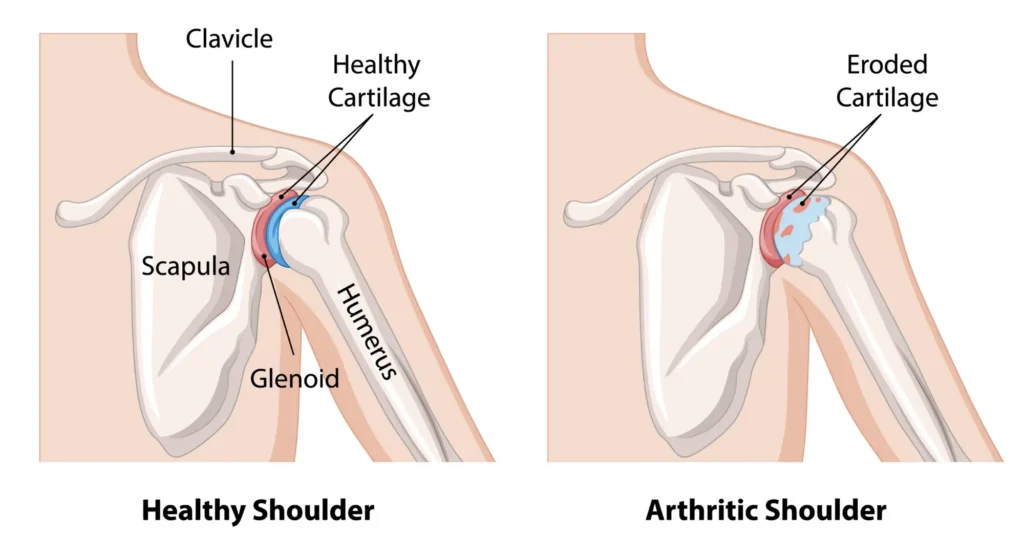
Shoulder arthritis is not a single condition. Several distinct types can affect the joint, and the type matters when it comes to choosing the right treatment approach.
Types and Causes of Shoulder Arthritis
Osteoarthritis
Osteoarthritis is the most common form and the one I see most frequently in my practice. It develops with age and cumulative wear. Cartilage simply breaks down over decades of use. It tends to present in patients over 50, though it can appear earlier in people with a history of heavy labor or repetitive overhead activity. There is no single event that triggers it. The damage accumulates slowly, which is part of why patients often tell me they cannot pinpoint exactly when it started.
Rheumatoid Arthritis
Rheumatoid arthritis is an autoimmune disease. The immune system mistakenly attacks the lining of the joint, called the synovium, triggering chronic inflammation that gradually erodes cartilage and bone. Unlike osteoarthritis, rheumatoid arthritis typically affects multiple joints at once and can occur at any age. Patients with rheumatoid arthritis often describe morning stiffness that lasts for an extended period, along with swelling that comes and goes.
Post-Traumatic Arthritis
Post-traumatic arthritis develops after a shoulder injury such as a fracture or dislocation. Even when the initial injury heals well, it can alter the mechanics of the joint in ways that accelerate cartilage wear over the following years. I see this fairly often in my sports medicine patients who had a significant shoulder injury in their younger years and are now noticing progressively worsening pain in middle age.
Rotator Cuff Tear Arthropathy
When a large rotator cuff tear goes untreated for a long time, it can destabilize the shoulder joint and cause the humeral head to migrate upward. That abnormal positioning creates irregular wear on the cartilage and eventually leads to a particular form of arthritis called rotator cuff tear arthropathy. This form is especially relevant because it typically requires a different surgical approach than standard osteoarthritis.
Symptoms of Shoulder Arthritis
Shoulder arthritis tends to progress through recognizable stages. In the early stages, patients may notice mild aching after activity, some stiffness in the morning, or occasional sharp pain when reaching in certain directions. As the arthritis advances, those symptoms become more consistent and harder to ignore.
Pain that worsens with overhead activity is one of the most common early complaints. Patients often describe difficulty reaching across the body or behind the back. A grinding, clicking, or catching sensation inside the joint can appear as the cartilage surface becomes irregular. Sleep disturbance is another major quality-of-life issue for many patients, since lying on the affected shoulder can become quite uncomfortable.
Loss of motion is one of the most functionally significant signs. Patients may gradually lose the ability to fully raise the arm overhead, rotate it outward, or reach behind the back. That loss can progress quietly until one day a patient realizes they can no longer wash their hair without pain, fasten a seatbelt, or put on a jacket.
What I See in My Patients
One of the patterns I notice consistently in my practice is that patients wait longer than they need to before coming in. By the time I see them, many have been managing pain on their own for a year or more, often with over-the-counter medications and the hope that it will improve on its own. I completely understand that impulse, but earlier evaluation usually leads to more options.
I also see a lot of patients who are surprised to learn they have arthritis because they do not think of themselves as at that age. Shoulder arthritis can show up in people in their 40s and 50s, particularly those with a history of sports injuries or physically demanding work. The Tampa Bay area has an active population, and many of my patients are not ready to slow down. That context shapes how I think about treatment goals with each person.
How Shoulder Arthritis Is Diagnosed
Diagnosing shoulder arthritis starts with a thorough history and physical examination. I want to understand when the pain started, what makes it better or worse, how it affects sleep and daily activities, and whether there has been any prior injury or surgery.
During the physical exam, I assess range of motion, strength, and areas of tenderness. I also look for signs that suggest the rotator cuff may be involved, since that affects treatment planning.
X-rays are the primary imaging tool for confirming shoulder arthritis. They show joint space narrowing, bone spurs, and changes in the shape of the bones. If I suspect a rotator cuff problem or need more detail about soft tissue involvement, I may order an MRI as well. The combination of clinical findings and imaging typically allows me to give patients a clear diagnosis and a realistic picture of the severity.
My Approach to Treatment
My approach to shoulder arthritis is to start with the most conservative option that gives a realistic chance of meaningful improvement. I never push patients toward surgery when there are non-surgical options still worth trying. At the same time, I think it does patients a disservice to keep cycling through treatments that are not working when surgery could genuinely restore their quality of life. The goal is always an honest conversation about what each approach can and cannot do.
Physical Therapy
Physical therapy is typically one of the first steps I recommend. A good therapist can strengthen the muscles around the joint, improve mobility, and teach movement strategies that reduce stress on the arthritic surfaces. Patients who engage consistently with their therapy program tend to do better across the board, regardless of where they ultimately land on the surgical question.
Medications and Injections
Anti-inflammatory medications can help manage day-to-day pain, though they should be used with appropriate guidance. Corticosteroid injections can offer more targeted, temporary relief and may be particularly useful in helping patients get through a period of significant flare-up or to buy time while working on therapy. For patients looking for a non-steroid option, platelet-rich plasma (PRP) therapy is something I discuss with selected patients. PRP uses concentrated growth factors from the patient’s own blood to support the body’s natural healing response.
Activity Modification
Sometimes small adjustments to how you move through your day can make a meaningful difference in symptoms. That might mean changing the way you approach overhead work, adjusting your sleep position, or modifying certain exercises.
When Surgery Becomes the Right Conversation
When conservative measures have been tried appropriately and are no longer providing adequate relief, I discuss surgical options with my patients. For shoulder arthritis, the primary surgical consideration is shoulder replacement.
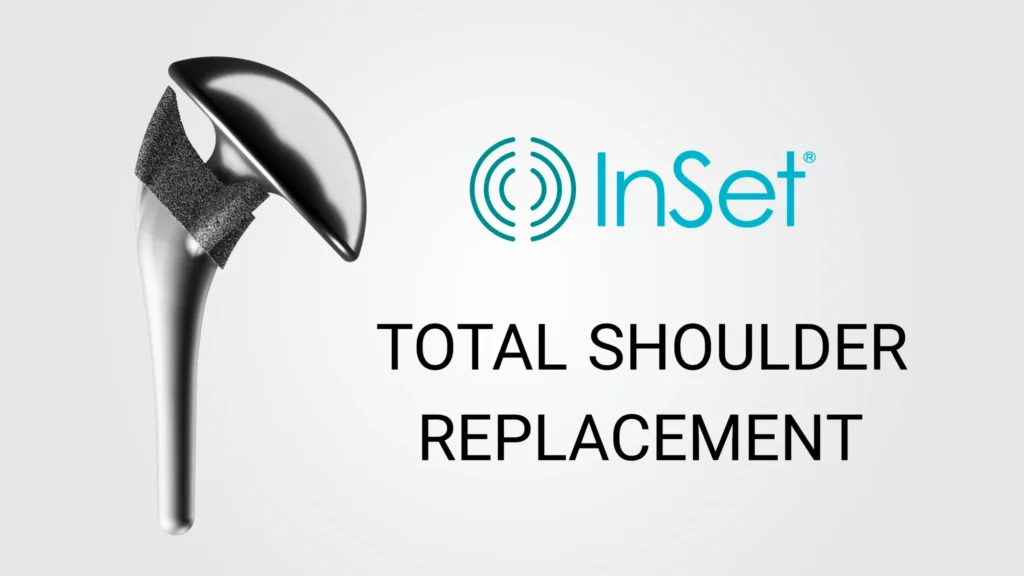
For patients with an intact rotator cuff, anatomic total shoulder replacement is typically the preferred approach. The damaged bone and cartilage surfaces are replaced with prosthetic components that restore the joint’s shape. I use the InSet® Total Shoulder System, which is designed to preserve bone while supporting stable fixation. The procedure typically takes one to two hours, and many patients are able to return home the same day.
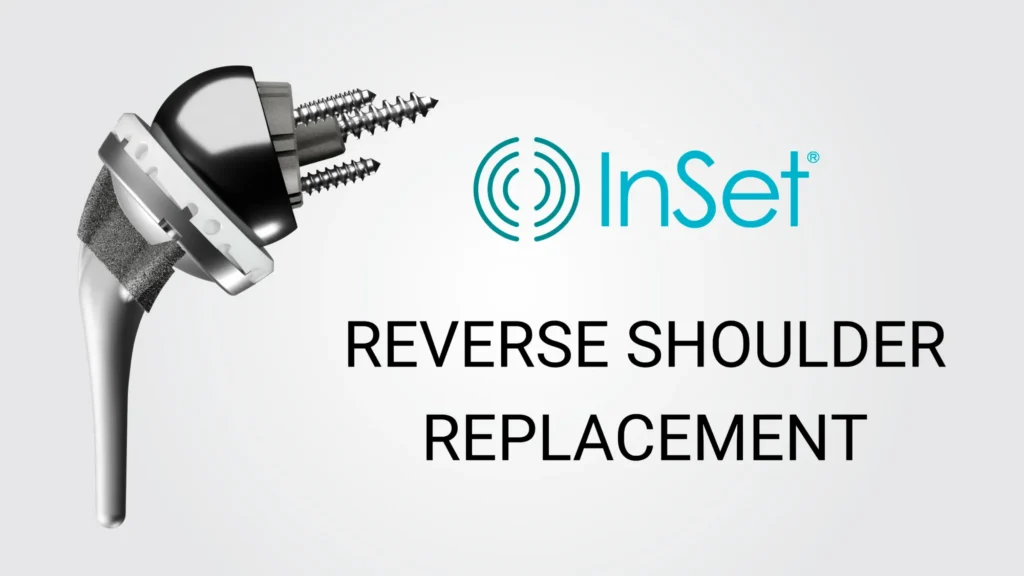
When the rotator cuff is severely damaged or the arthritis involves rotator cuff tear arthropathy, reverse shoulder replacement is often the better option. By flipping the ball-and-socket orientation, this design allows the deltoid muscle to power the arm when the rotator cuff can no longer do that job. The decision between these two approaches depends on the status of the rotator cuff, the severity of the arthritis, bone quality, and patient goals. I review all of those factors carefully before making a recommendation.
Summary
Shoulder arthritis is a progressive condition, but progressive does not mean inevitable decline. Many patients I work with find meaningful relief long before surgery becomes necessary. And for those who do reach the point where replacement surgery makes sense, anatomic and reverse shoulder replacement have restored function and relieved pain for many patients.
If you are living with persistent shoulder pain, stiffness, or loss of motion, and it is affecting your quality of life in the Tampa Bay area, I encourage you to come in for an evaluation. The earlier we understand what is driving your symptoms, the more options we have. A conversation with a shoulder specialist is a low-risk, high-value step. You can schedule a consultation with my team online, or call us at (727) 547-4700.
Frequently Asked Questions
Is shoulder arthritis the same as a rotator cuff tear?
No, though they can coexist. A rotator cuff tear is damage to one or more of the tendons that stabilize the shoulder. Shoulder arthritis is degeneration of the cartilage inside the joint itself. Both can cause pain and reduced function, but they are distinct diagnoses that may require different treatment approaches. A thorough evaluation helps clarify which problem, or which combination of problems, is driving your symptoms.
How do I know if my shoulder pain is arthritis or something else?
Shoulder pain has many possible causes, including rotator cuff problems, bursitis, labral tears, and referred pain from the neck. Without an examination and imaging, it is not possible to say with certainty. That said, arthritis tends to present with gradual onset, stiffness that is worse in the morning and after rest, and progressive loss of range of motion over months or years. If that pattern sounds familiar, it is worth getting an evaluation.
Will I need a shoulder replacement if I have shoulder arthritis?
Not necessarily. Many patients manage shoulder arthritis effectively for years with non-surgical treatment. The decision to pursue shoulder replacement depends on the severity of the arthritis, how much it affects your quality of life, and whether conservative options have provided adequate relief. I discuss this decision carefully with each patient.