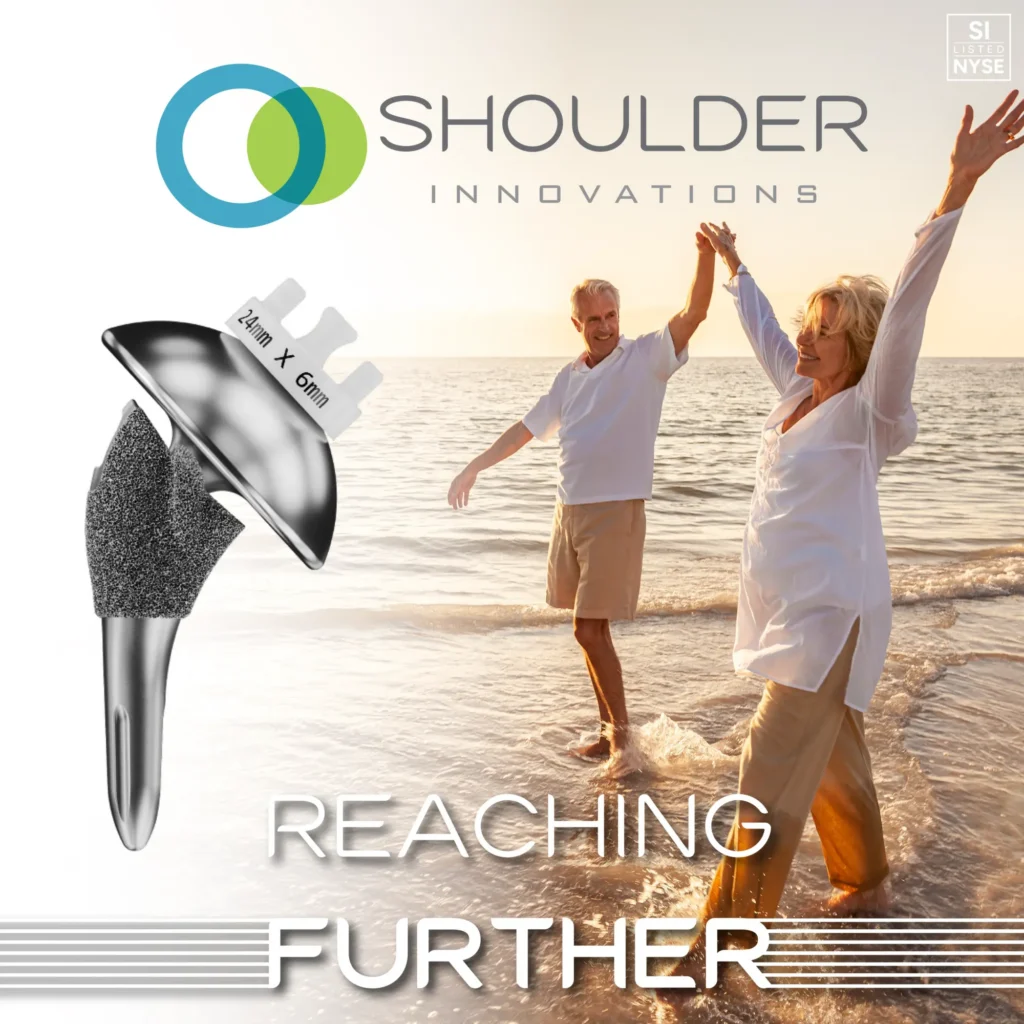

Medically reviewed by Scott Vizzi, M.D. | Reviewed August 2026
Two patients can sit across from me in my Largo office with nearly identical-looking X-rays and walk out with two completely different surgical plans. One gets an anatomic shoulder replacement. The other gets a reverse. That split isn’t random. When I’m weighing anatomic vs. reverse shoulder replacement for a patient, one structure drives the decision more than any other: the rotator cuff. Whether it’s intact, torn, or simply worn out changes almost everything about how I rebuild the joint, and it’s usually the first thing I explain once we’ve agreed that surgery makes sense.
Key Takeaways
- Anatomic vs. reverse shoulder replacement isn’t a matter of surgeon preference. The decision comes down largely to whether the rotator cuff is intact and functioning.
- Anatomic replacement mirrors the shoulder’s natural ball-and-socket design and tends to work best when the rotator cuff is healthy.
- Reverse replacement flips the anatomy, allowing the deltoid muscle to power the arm when the rotator cuff can no longer do the job.
- Bone quality, the severity of arthritis, and a patient’s activity goals all factor into which option I recommend.
What Anatomic Shoulder Replacement Actually Replaces
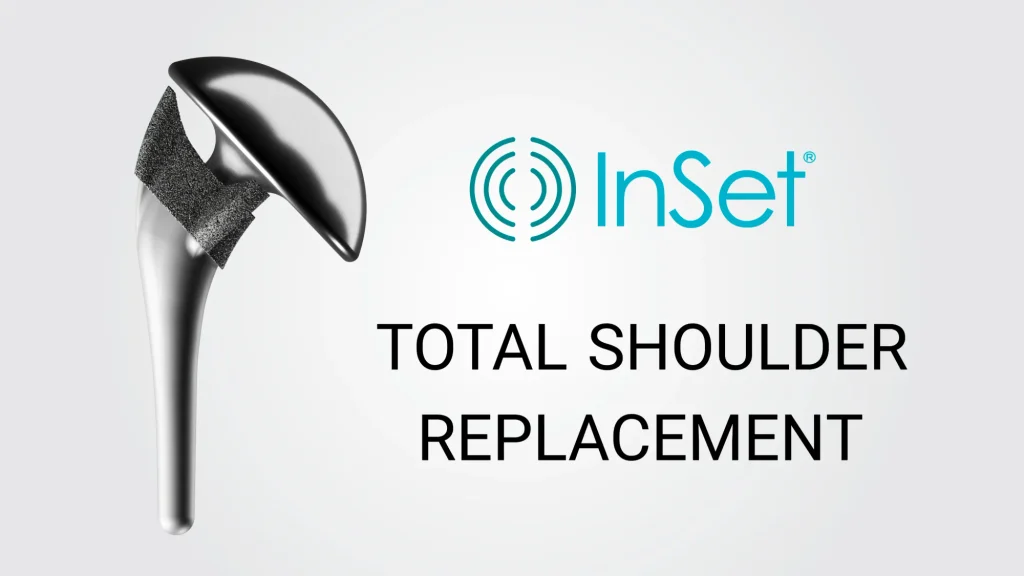
The shoulder is a ball-and-socket joint. The “ball” is the top of the humerus, and the “socket” is a shallow dish on the shoulder blade called the glenoid. In an anatomic replacement, damaged cartilage and bone on both sides get resurfaced with prosthetic components shaped to match that original anatomy. The rotator cuff muscles are left in place and continue doing what they’ve always done: centering the ball in the socket and powering rotation.
This approach generally works best for patients whose rotator cuff is intact and functioning well, most commonly people with straightforward osteoarthritis. I use the InSet® Total Shoulder System, which is designed to preserve bone stock while providing stable, lasting fixation.
What Changes With a Reverse Shoulder Replacement
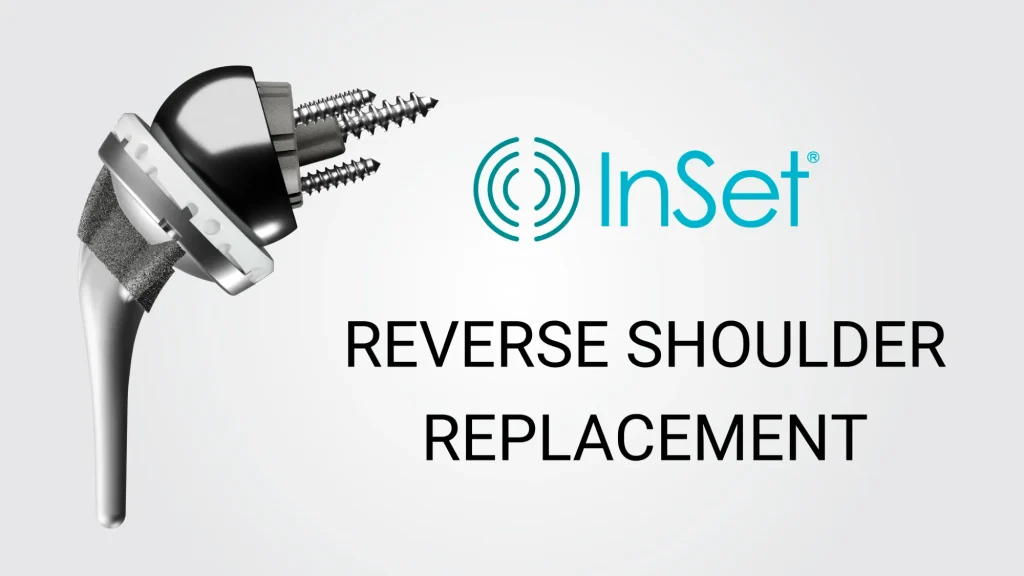
A reverse shoulder replacement takes the same two components and, essentially, swaps their positions. The ball attaches to the shoulder blade side, and the socket attaches to the top of the humerus. That reversal sounds subtle on paper. Functionally, it changes everything, because it lets the deltoid, a much larger and more durable muscle, take over the job of lifting the arm.
This design was developed specifically for shoulders where the rotator cuff is too damaged to do that work anymore, a condition called rotator cuff tear arthropathy. It’s also frequently the better option for certain complex fractures, failed prior replacements, and some cases of severe bone loss. For reverse replacements, I use the InSet® Reverse Shoulder System. It features a lateralized-lateralized design that aims to maximize post-operative function.
Who Tends to Need Which Option
In practice, a fairly clear pattern emerges once I’ve reviewed enough imaging. Patients with straightforward osteoarthritis, worn cartilage, a preserved joint space on one side, and rotator cuff tendons that still look healthy on MRI, tend to be strong candidates for anatomic replacement. Their own muscles and tendons are still capable of doing the work, so there’s no reason to change the joint’s fundamental design.
Patients who’ve lived with a long-standing, untreated rotator cuff tear often present differently. Over years, an unrepaired cuff tear can allow the humeral head to migrate upward, wearing unevenly against the socket and the underside of the shoulder blade. By the time that pattern shows up on imaging, an anatomic replacement usually isn’t a realistic option, because there’s no functioning cuff left to power it. A reverse replacement becomes the more reliable path forward in that scenario.
Prior shoulder surgery adds another layer. Someone who’s already had a failed replacement, a complex fracture repair, or significant bone loss from a previous procedure may need a reverse replacement even if their rotator cuff is technically intact, simply because the remaining bone and soft tissue can no longer support an anatomic design reliably.
What I See in My Patients
Many of my patients here in the Tampa Bay area are active retirees. They golf, they’re on the water constantly, and they tend to walk in assuming a reverse replacement means their case is somehow worse or more complicated than a friend’s anatomic replacement. I hear that assumption often enough that I try to correct it early. A reverse replacement isn’t a downgrade. It’s simply the right tool for a different anatomical problem, and plenty of my reverse patients get back to boating, swimming laps, and playing with grandkids without much of a functional gap compared to my anatomic patients.
What I’ve also noticed is that patients who come in with a clear picture of why one option fits their shoulder, rather than just being told which one they’re getting, tend to feel far more confident heading into surgery. I walk through the reasoning with every patient.
I also see a fair number of patients who delayed treatment for years, hoping the pain would eventually settle on its own. In some of those cases, that delay is exactly what pushed them from being an anatomic candidate into needing a reverse replacement instead, since the rotator cuff can continue deteriorating the longer a tear goes unaddressed. That’s not a reason to panic if you’ve been putting off an evaluation, but it is part of why I encourage patients not to wait indefinitely once shoulder pain starts limiting daily life.
How I Decide: My Approach to Treatment
Before I recommend either procedure, I look closely at a handful of factors, and none of them get decided from an X-ray alone. Some of the factors include:
- Rotator cuff integrity: I typically order an MRI to evaluate the cuff tendons directly, since plain X-rays can’t always tell the full story.
- Severity and pattern of arthritis: Certain wear patterns, especially significant glenoid bone loss, push me toward one option over the other.
- Bone quality: Osteoporotic or previously operated bone can limit which implant will actually hold securely over time.
- Activity goals: A patient hoping to return to overhead sports or heavy lifting factors differently into my recommendation than someone whose main goal is pain-free daily function.
Recovery: What to Expect With Either Option
Both procedures generally start with a period in a sling, followed by a structured physical therapy program that gradually rebuilds motion and then strength. Anatomic replacement recovery often emphasizes protecting the rotator cuff repair itself in the early weeks, since overloading those tendons too soon can compromise the result. Reverse replacement recovery tends to progress somewhat differently, since the deltoid, not the cuff, is doing most of the work.
Pain typically improves considerably within the first several weeks for both procedures, though full strength and motion gains often continue for several months afterward. I check in with patients regularly through that window.
Most patients I see are back to normal daily activities, including driving and light household tasks, within a handful of weeks, though higher-demand activities like golf or swimming generally take longer to reintroduce safely.
Summary
The anatomic vs. reverse shoulder replacement decision comes down to what your rotator cuff, bone quality, and goals call for. Anatomic replacement preserves your shoulder’s natural mechanics when the cuff is healthy. Reverse replacement rebuilds function around a cuff that can no longer do its job. If shoulder arthritis has started limiting what you can do, the most useful next step is a hands-on evaluation and, in most cases, an MRI, so we can figure out which option actually fits your shoulder rather than guessing from symptoms alone. If that sounds like where you are, I’d encourage you to schedule a consultation so we can look at your imaging together and talk through the option that makes sense for you.
Frequently Asked Questions
Am I too young for a shoulder replacement?
Age alone rarely rules a patient out. I look more closely at activity level, bone quality, and how much the joint is limiting daily life than at a birthdate.
Will I have full range of motion after either procedure?
Many patients regain substantial motion and function, though outcomes vary based on the shoulder’s condition going in, cuff status, and how consistently rehab is followed.
How do I know which option is right for me?
That really requires imaging and a physical exam, not a guess based on symptoms. I walk every patient through their specific findings before recommending a path.
How long do shoulder replacements typically last?
Implant longevity depends on several factors, including activity level, bone quality, and overall health. Many patients get many years of reliable function from either option, and I discuss realistic expectations around implant lifespan as part of every surgical consultation.