
Medically reviewed by Scott Vizzi, M.D. | Reviewed July 2026
One of the most common questions I get in clinic is some version of, should I get a cortisone shot or should I try PRP? I understand why this comes up. Both are injections, both are done in the office, and both can genuinely help shoulder pain. But PRP vs. cortisone injections for shoulder pain is not really an either-or decision in my mind. It is a question of what the shoulder needs at that particular point in time, what the patient’s goals are, and how much time they are willing to give the treatment to work. I want to walk through how I actually think about this choice with my own patients here in the Tampa Bay area.
Key Takeaways
- Cortisone reduces inflammation quickly and tends to work faster, but repeated use may not be ideal for tendon tissue over time.
- PRP uses concentrated platelets from a patient’s own blood and tends to work more gradually, over weeks rather than days.
- Neither injection is a permanent fix. Both are tools I use as part of a broader treatment plan.
What Cortisone Injections Do
Cortisone is a corticosteroid, a powerful anti-inflammatory medication that can be injected directly into a joint or around an irritated tendon. It works by calming inflammation at the injection site, and for a lot of patients that translates into meaningful pain relief within a few days. This makes cortisone a reasonable option when someone needs relief quickly, for example before a big trip or a stretch of physical work they cannot easily take off. It may also be used to allow a patient to more fully participate in physical therapy.
The tradeoff is durability and, in some cases, tissue quality. Cortisone does not address an underlying tear or degenerative change in a tendon, and some orthopedic literature has raised questions about the effect of repeated corticosteroid injections on tendon and cartilage health over time. I am comfortable using cortisone in the right situation, but I do not think of it as something to repeat indefinitely.
What PRP Injections Do
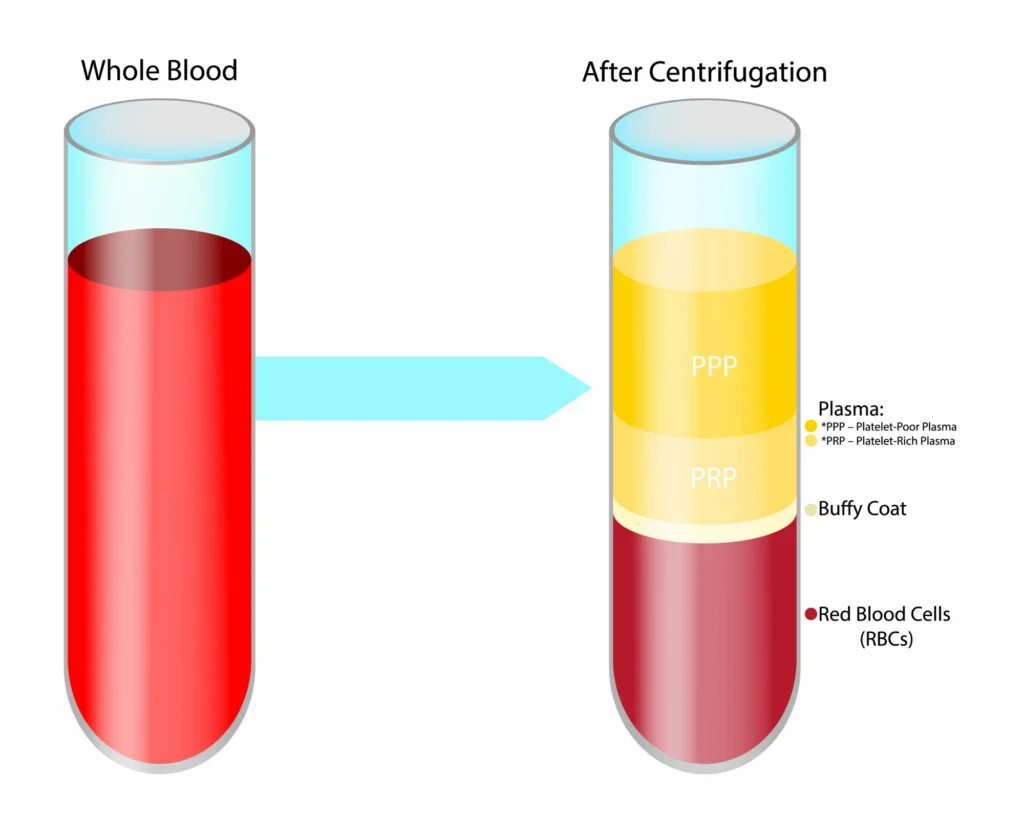
Platelet-rich plasma (PRP) therapy uses concentrated platelets drawn from a patient’s own blood, spun down in a centrifuge, and injected back into the area of injury. Platelets carry growth factors and signaling proteins involved in tissue repair, and the idea behind PRP is that concentrating those components and delivering them directly to an injured area may help support the body’s own healing response.
In my practice, I discuss PRP therapy most often for rotator cuff tendinopathy, partial-thickness rotator cuff tears, subacromial bursitis, mild to moderate glenohumeral arthritis, biceps tendinitis, and partial labral injuries without instability. Because PRP comes from a patient’s own blood, the entire process happens in one office visit, typically in under an hour. Patients are usually advised to avoid anti-inflammatory medications for a short period afterward, since some temporary inflammation is actually part of the intended biologic response.
What the Injection Visit Actually Involves
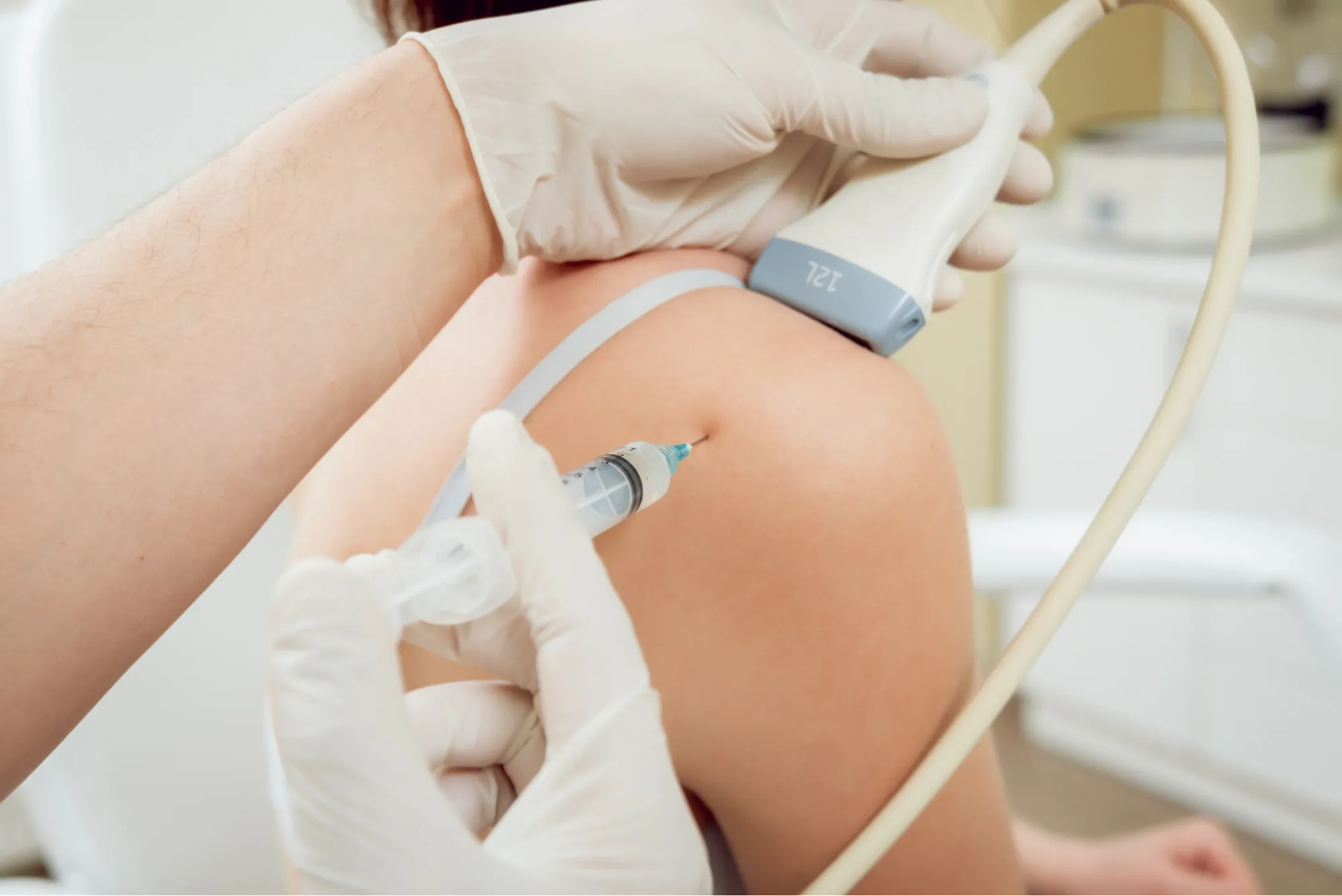
A cortisone injection is quick. I identify the target area, sometimes with ultrasound guidance, and the injection itself takes only a few minutes. Most patients are in and out of the office in well under an hour, and many go straight back to normal activity, aside from some soreness that can show up for a day or two.
PRP takes a bit longer because the treatment starts with a blood draw. That blood goes into a centrifuge, which separates it into layers and concentrates the platelet-rich portion. Once that platelet concentrate is ready, I inject it into the target area, sometimes with ultrasound guidance to support accuracy. The whole process, from blood draw to injection, typically takes under an hour, but it is still a longer visit than a cortisone shot.
How I Compare the Two
I think the honest answer is that cortisone and PRP are not really competing for the same job. Cortisone is built for speed. If a patient is dealing with an acute flare of bursitis or impingement and needs to feel better this week, cortisone is often my first suggestion. PRP is built for a longer game. If someone has chronic tendinopathy or a partial tear that has been building for months, I am more likely to bring up PRP, because the goal there is supporting the tissue itself, not just quieting inflammation for a few weeks.
I also weigh how many cortisone injections a patient has already had. If someone has had two or three shots in the same shoulder over the past year with diminishing benefit each time, that tells me something. At that point I usually steer the conversation toward PRP or toward a more definitive structural evaluation rather than reaching for another injection.
I will say directly that I am not a fan of using cortisone as a repeated maintenance strategy for the same tendon problem year after year. It can mask pain effectively, which sometimes leads a patient to push through activity that the tendon is not actually ready for. PRP does not carry that same masking effect in my experience, since the goal is supporting the tissue rather than simply numbing the area, though it asks for more patience while it works.
What I See in My Patients
A lot of my patients in St. Petersburg, Largo, and Sarasota are active well past the age when they expect their bodies to slow down. Pickleball, boating, and gardening keep shoulders working hard year-round down here, and I see plenty of patients who just want to get back to those activities without a long recovery process. For that group, I find PRP appealing because it does not carry the same restrictions as surgery, and many patients are back to light activity within days. I have also treated athletes affiliated with the Blue Jays organization who wanted to avoid the downtime associated with more invasive options.
I also see a fair number of patients who come in already convinced they want PRP because they read about it online, without a clear diagnosis to support that choice. I do not think that is the right way to make this decision. A rotator cuff tear that has become large or a shoulder with significant structural instability is not going to respond the same way to PRP as a case of mild tendinopathy, and I would rather have that honest conversation up front than let a patient spend money on a treatment that is unlikely to match their actual problem.
Which Patients Are Good Candidates for Each
Cortisone tends to make the most sense for acute inflammation, bursitis, or a flare of an already-diagnosed condition where fast relief is the priority. PRP tends to make more sense for chronic tendinopathy, partial tears, or patients hoping to avoid or delay surgery while supporting the tissue itself. Response to either treatment varies by condition and by individual.
Summary
If you are trying to decide between PRP and cortisone for shoulder pain on your own, I would encourage you to slow down and get a diagnosis first, because the right injection depends entirely on what is going on structurally in the shoulder. Schedule a consultation with me and we will look at your shoulder, talk through your goals, and figure out which option, if either, makes sense for where you are right now.
Frequently Asked Questions
Is PRP better than cortisone for shoulder pain?
Neither is universally “better.” Cortisone tends to work faster for acute inflammation, while PRP tends to work more gradually and may be a better fit for chronic tendon problems. The right choice depends on the diagnosis.
How long does it take to feel better after a PRP injection?
Improvement is often gradual, developing over several weeks to months rather than days. Some patients notice mild soreness at the injection site initially, which is a normal part of the process.
Can I try cortisone first and PRP later if it does not work?
In many cases, yes. This is a common sequence I discuss with patients, particularly when quick relief is the initial priority and a longer-term plan can be built afterward.
Should I do physical therapy along with these injections?
Often, yes. I frequently pair either injection with physical therapy, since strengthening and correcting mechanics tends to support whatever benefit the injection itself provides. An injection alone rarely solves an underlying mechanical problem in the shoulder.