

Medically reviewed by Scott Vizzi, M.D. | Reviewed August 2026
Before performing a biceps tenodesis, I make sure my Tampa Bay patients understand exactly what the procedure is designed to accomplish. Because one of the biceps tendons attaches inside the shoulder joint, damage to that tendon can cause ongoing pain and often occurs alongside other shoulder injuries. In this post, I’ll explain when I recommend biceps tenodesis, how the procedure works, and what to expect during recovery.
Key Takeaways
- Biceps tenodesis relocates the long head of the biceps tendon to a new attachment point, taking tension off a damaged or inflamed segment inside the joint.
- It’s commonly performed alongside other shoulder procedures, including rotator cuff repair, labral repair, and shoulder replacement.
- In many cases, the procedure can be performed arthroscopically, through small incisions.
- Recovery generally involves a period of sling protection followed by a gradual, structured return to motion and strength.
The Biceps Tendon’s Unusual Path Through the Shoulder
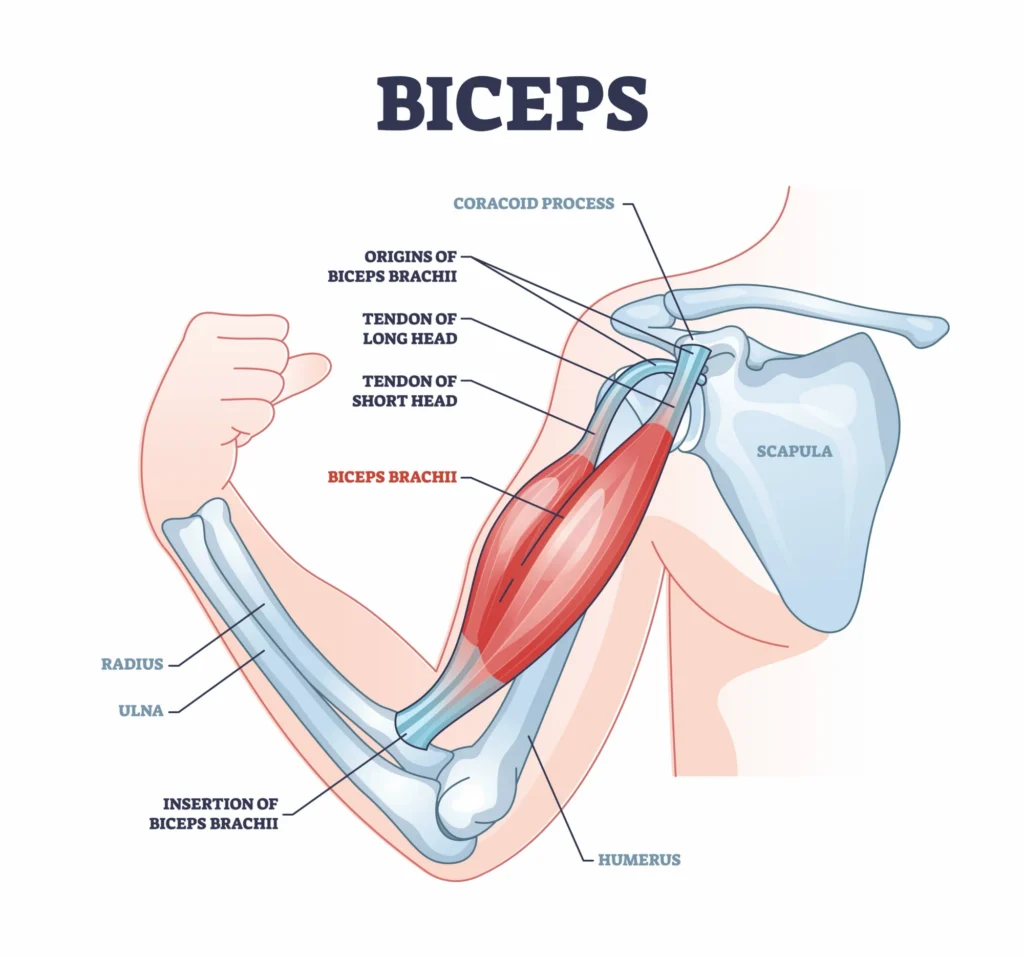
Most people think of the biceps as an upper-arm muscle, and it is, but its long head tendon actually originates inside the shoulder joint, attaching near the top of the labrum. From there, it travels through a narrow groove before continuing down into the arm. That path through the joint makes it biomechanically vulnerable. Repetitive overhead motion, general wear over time, or a tear involving the labrum can all irritate or damage this segment of tendon, producing pain that’s often felt at the front of the shoulder.
Why Tenodesis, and Not Just Releasing the Tendon?
There are generally two surgical options when the biceps tendon itself is the problem: tenotomy, which simply releases the damaged tendon, or tenodesis, which detaches it and reattaches it lower down, typically near the top of the humerus. Tenotomy is a simpler, faster procedure with a quicker initial recovery, but it can result in a cosmetic bulge sometimes called a “Popeye” deformity, along with occasional cramping.
Tenodesis takes a bit longer and asks more of the recovery process, but it generally preserves a more normal contour and tends to retain more of the tendon’s original strength and function. I typically favor tenodesis for younger, more active patients, and for anyone whose strength and appearance matter more to their goals, while tenotomy may be a reasonable choice in older, lower-demand patients.
Who Typically Needs This Procedure
Not every ache in the front of the shoulder points to the biceps tendon, so I don’t jump to this diagnosis without confirming it first. The patients who tend to benefit most generally fall into a few categories: those with biceps tendon inflammation (tendinitis) that hasn’t improved with conservative treatments, those with a partial tear of the tendon found on imaging or during another procedure, and those with instability of the tendon within its groove.
A physical exam with specific provocative tests, combined with MRI findings in most cases, helps confirm the biceps tendon as the actual source of pain rather than an incidental finding.
What I See in My Patients
A good share of the biceps tenodesis procedures I perform aren’t stand-alone surgeries. They come up as part of a bigger picture: alongside a rotator cuff repair, a labral repair, or occasionally as part of a shoulder replacement, since the biceps tendon can be a source of ongoing pain even after the primary problem is addressed. In an active market like the Tampa Bay area, where I see everything from competitive throwers to patients who spend their weekends hauling boats and gear, biceps tendon irritation shows up often enough that I check it as a matter of routine during almost every shoulder evaluation.
Patients are sometimes surprised to learn the biceps was even part of their problem. I don’t think that surprise is unusual. Biceps pathology tends to hide behind whatever the primary diagnosis is, and it’s easy to overlook if a surgeon isn’t specifically checking for it.
I also see a fair number of patients who tried to push through front-of-shoulder pain for months, assuming it was just part of a broader rotator cuff issue they were already managing. In several of those cases, addressing the rotator cuff alone left them with lingering discomfort, and it turned out the biceps tendon needed attention as well. That’s part of why I evaluate the biceps specifically, rather than assuming it will resolve on its own once the primary problem is treated.
My Approach to Treatment
My decision on tenodesis versus tenotomy, and open versus arthroscopic technique, comes down to a handful of patient-specific factors: age, activity level, whether the biceps issue is standing alone or accompanying another repair, and the patient’s own priorities around strength and appearance. When I’m already performing shoulder arthroscopy for another reason, addressing a symptomatic biceps tendon at the same time can be more efficient than treating it as a separate procedure down the line.
Concurrent biceps tenodesis also comes up during shoulder replacement in select patients, since the tendon can remain a pain generator even after the joint itself has been rebuilt. I discuss that possibility ahead of surgery whenever imaging or exam findings suggest it’s worth addressing at the same time, rather than leaving it as a decision made in the operating room without the patient’s input.
Recovery After Biceps Tenodesis
Recovery typically starts with a period of sling protection to let the tendon heal at its new attachment point, followed by a gradual physical therapy progression that reintroduces motion before strengthening. Early on, I generally ask patients to avoid resisted elbow flexion and heavy lifting with the involved arm, since loading the tendon too soon can compromise how well it heals at its new attachment site.
Specific timelines vary depending on whether the tenodesis was performed alone or alongside another procedure, so I build an individualized plan for every patient rather than applying a single generic timeline. When tenodesis accompanies a rotator cuff repair or a shoulder replacement, the biceps portion of the recovery generally follows the same broader protective timeline as the primary procedure, since the shoulder as a whole needs time to heal regardless of which structures were involved.
Most patients notice steady improvement in comfort and function over the weeks following surgery, with continued gains in strength often extending out several months. I follow up regularly during that window to confirm healing is progressing as expected and to adjust the therapy plan if anything feels slower than anticipated.
Summary
Biceps tenodesis addresses a specific, often under-recognized source of shoulder pain: a damaged or inflamed segment of the biceps tendon inside the joint. Rather than simply cutting the tendon loose, tenodesis reattaches it to preserve strength and a more natural contour, which is why I favor it for most active patients. Whether it’s performed on its own or alongside a rotator cuff repair, labral repair, or shoulder replacement, the goal stays the same: removing a pain source that conservative treatment hasn’t resolved.
If you’ve been dealing with persistent front-of-shoulder pain that hasn’t improved with rest and therapy, the most useful next step is an exam to determine whether the biceps tendon is actually the culprit. I’d encourage you to schedule a consultation so we can take a closer look at what’s driving your symptoms.
Frequently Asked Questions
Is biceps tenodesis a major surgery?
It’s a well-established procedure, and in many cases it can be performed arthroscopically. That said, any shoulder surgery deserves a real recovery commitment, and I walk every patient through what that involves before we proceed.
How long until I can lift weights again?
This varies by patient and by whether other procedures were performed at the same time. I generally restrict resisted elbow flexion and heavy lifting early in recovery, then reintroduce it gradually as healing progresses.
What happens if biceps tendon damage is found during another surgery but wasn’t planned for?
This does happen occasionally. I discuss the possibility with patients ahead of time whenever imaging or exam findings raise any suspicion, so that a decision about addressing it isn’t made without their input during the procedure itself.