
Medically reviewed by Scott Vizzi, M.D. | Reviewed July 2026
One of the first questions patients ask after we decide surgery is the right next step is, “How long is recovery from rotator cuff surgery?” It’s a fair question, but the answer isn’t the same for everyone. Recovery depends on the size of the tear, the quality of the tendon tissue, and honestly, how closely a patient follows the rehabilitation plan afterward. What I can offer is a realistic sense of the general timeline based on what I see in my own practice here in the Tampa Bay area, so patients can plan their work, sports, and everyday life with reasonable expectations.
Key Takeaways
- Recovery from rotator cuff surgery generally unfolds over several months, not weeks, even though pain often improves faster.
- Tear size and tissue quality are the biggest factors that affect how long recovery actually takes.
- Return to sport or heavy manual work takes longer than return to normal daily activities.
What Happens During Rotator Cuff Repair
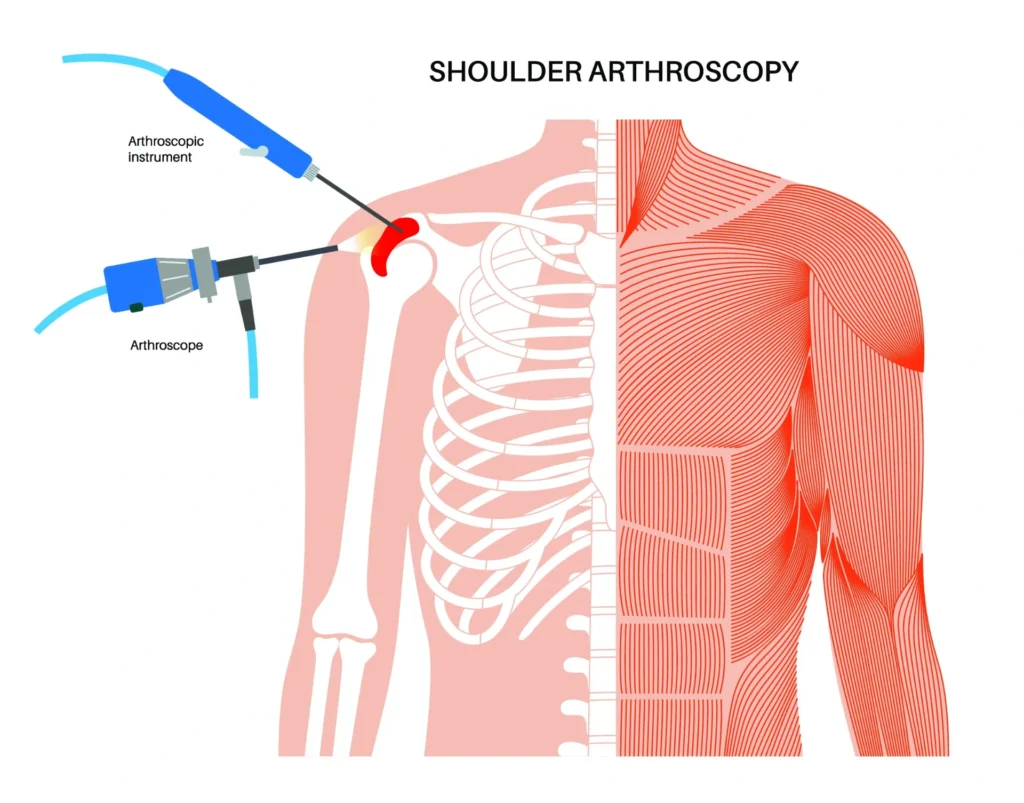
Most of the rotator cuff repairs I perform are done arthroscopically, using a small camera and specialized instruments through a few small incisions rather than a large open incision. During the procedure, I reattach the torn tendon to bone using suture anchors, restoring the connection that allows the rotator cuff to do its job. The specific technique and number of anchors depend on how the tendon tore and how much tissue is available to work with.
Many patients are surprised to learn this is typically an outpatient procedure. Most people go home the same day, though the recovery plan that follows depends heavily on what was actually repaired. A small, isolated tear involves a very different rehab path than a large tear that also involves the biceps tendon or additional structures around the shoulder, so I try to explain during the surgical consent conversation what I expect to find, and how that might shift the plan once I am actually inside the joint.
The General Recovery Timeline
I do not think it serves patients well to promise a precise week-by-week schedule that may not hold up for their specific tear. Recovery timelines can vary. That said, in general terms, recovery moves through a few broad phases. Early on, the shoulder is protected in a sling to allow the tendon repair to heal without being stressed by the arm’s own weight. As healing progresses, therapy shifts toward gradually restoring motion, and later toward rebuilding strength. Full recovery, meaning a return to unrestricted activity, often takes several months, and for some patients closer to a year for the repair to reach its full strength.
Tendon healing to bone is a biological process that takes time, and rushing motion or strength work before the tissue is ready is one of the more common ways a repair gets compromised. Patients who treat the first few weeks seriously tend to have smoother recoveries later on.
What Affects How Long Recovery Actually Takes
Tear size is one of the biggest variables. A small partial-thickness tear generally heals on a shorter timeline than a large, full-thickness tear involving multiple tendons. Tissue quality matters just as much. Tendon that has been torn for a long time or that shows significant fatty degeneration on imaging does not always heal as predictably as fresher, healthier tissue, and I discuss that possibility honestly with patients before surgery rather than after.
Age, overall health, and how consistently a patient attends physical therapy all play a role too. I think patient effort is underrated as a factor. I have seen younger, less severe tears take longer to recover than expected because therapy was inconsistent, and I have seen larger tears in motivated patients recover ahead of a typical timeline.
Signs Recovery Is Progressing Well
Patients commonly ask how they will know if their recovery is on the right track, especially in the early weeks when progress can feel slow. I look for a few things at follow-up visits: pain that trends downward rather than staying flat or worsening, motion that improves gradually with therapy rather than in sudden jumps, and strength that returns in a predictable sequence rather than all at once. A shoulder that suddenly regains a lot of motion very early after surgery is not always a good sign. Sometimes it means the repair is being stressed too soon, which is exactly why I do not encourage patients to push hard in the first few weeks even if it feels tempting.
I also pay attention to how a patient describes their pain from visit to visit. Sharp, new pain during a specific movement tells me something different than a general ache that improves with rest and ice. I would rather a patient call the office with a question than assume something is fine when it does not feel right.
What I Tell My Patients
I ask almost every patient the same question before any type of surgery: what do you need your shoulder to do, and by when? A retiree in Sarasota who wants to get back to golf has a different conversation than a manual laborer in Largo who needs to lift overhead for a living, or one of my Toronto Blue Jays athletes hoping to get back on the field for next season. I would rather set an honest expectation up front than have a patient feel behind schedule three months in because I gave them an overly optimistic number at the first visit.
My Approach to Rehab
I work closely with physical therapy from the very first postoperative visit, and I think that early coordination matters as much as the surgery itself. My general approach follows the same broad phases I use for other shoulder arthroscopy recoveries: protecting the healing tissue, gradually restoring motion, then progressive strengthening, and finally a structured return to work or sport-specific activity. I check in at regular intervals to confirm the repair is healing on track before advancing a patient to the next phase, rather than progressing purely by the calendar.
For patients with lingering tendon irritation after the repair has healed, I have occasionally discussed PRP as a supplement to therapy, though this is decided on a case-by-case basis and is not part of every recovery.
Communication is also key. I want to know if a patient is plateauing, favoring the shoulder in a way that suggests apprehension, or progressing faster than expected, because any of those situations can change how I approach the next phase of the plan.
Summary
While everyone’s rotator cuff surgery recovery timeline is different, most patients should plan on several months of healing and rehabilitation rather than expecting to feel back to normal within a few weeks. The good news is that patients who commit to the rehab process often get back to the activities that matter most to them. If you are dealing with shoulder pain and are not sure whether surgery is even the right path yet, schedule a consultation and let’s figure out where you stand before assuming surgery is the next step.
Frequently Asked Questions
When can I drive after rotator cuff surgery?
Most patients cannot safely drive while in a sling and while pain or motion is limited. I evaluate this individually, since it depends on which shoulder was operated on, medication use, and how much control a patient has regained.
When can I go back to work?
It depends entirely on the job. Desk work often resumes sooner than physical labor or overhead work, which typically requires a much longer recovery before it is safe to resume.
What happens if I skip physical therapy after surgery?
Skipping or rushing therapy is one of the more common reasons recovery does not go as smoothly as expected. Consistent, guided rehab is a central part of getting a good result from the repair itself.
Can I sleep normally after rotator cuff surgery?
Sleep can be one of the harder parts of early recovery for a lot of patients. Sleeping in a slight incline, such as in a recliner or with extra pillows, tends to be more comfortable than lying flat in the first several weeks, though this varies by patient. Together we can work to find a sleeping position that works best for you.